The important word is clues. No single tail position or facial expression tells the whole story. A cat’s body language should be read as a combination of signals, in the context of what is happening around them.
Use this guide to become more observant, respect your cat’s boundaries and recognise when a change in behaviour may need attention.
Start with the whole cat, not one body part
Before interpreting a signal, take a moment to look at the entire body. Is your cat loose and relaxed, or tense and ready to move? Are the ears, eyes and tail telling a similar story? Is there a noise, person, animal or activity that might explain the reaction?
A cat can move quickly from curiosity to discomfort. Subtle early signs matter, so do not wait for a hiss or a swat before giving a cat space.
1. Tail held upright
A tail held upright, sometimes with a gentle curve at the tip, is often seen when a cat approaches a familiar person or moves around comfortably. It can be a friendly social signal.
2. Tail tucked close to the body
A tucked or tightly wrapped tail can occur when a cat is frightened, uncertain or trying to make itself less noticeable. Look for other signs such as a crouched posture, flattened ears or avoidance.
3. Tail flicking or lashing
A rapidly moving or lashing tail can signal arousal, irritation or intense focus. It is a good reason to pause petting or play and see what your cat does next. Tail movement is not a reliable one-signal mood meter: context matters.
4. Puffed-up tail
A puffed-up tail means the cat’s fur is standing on end. This can happen when a cat is startled, frightened or highly aroused. The cat may look larger as part of a defensive response.
Give the cat room to move away. Do not approach to stroke a puffed-up cat.
5. Ears facing forward
Forward-facing ears often indicate that a cat is attentive to something. The cat may be curious, interested or focused. Check the eyes and body posture to understand whether the attention seems relaxed or tense.
6. Ears turned sideways or flattened
Ears turned sideways or flattened can indicate fear, discomfort, defensive behaviour or irritation. If the ears move back while you are petting your cat, stop and allow the cat to choose whether to continue.
7. Soft, partly closed eyes
Soft eyes and relaxed eyelids can be seen when a cat is comfortable. Some cats slowly narrow their eyes during calm interactions with people.
8. Slow blinking
A slow blink is a sequence of eye-narrowing movements. Research has found that cats respond to human slow-blink interactions and may be more likely to approach a person after one. You can try slowly narrowing your eyes and gently closing them while giving your cat space to respond.
It is not a magic test of affection, and a cat does not have to blink back to feel comfortable.
9. Wide eyes and enlarged pupils
Large pupils can occur in low light, during play, excitement, fear or other states of arousal. They are not a standalone measure of fear. Consider the lighting, ears, posture and what has just happened.
10. Whiskers pointing forward
Whiskers can move with attention and changes in the cat’s facial expression. Forward-pointing whiskers may be seen when a cat is investigating something. Whiskers held close or flattened may occur when a cat is fearful or defensive. Avoid making a judgement from whiskers alone.
11. Crouching low
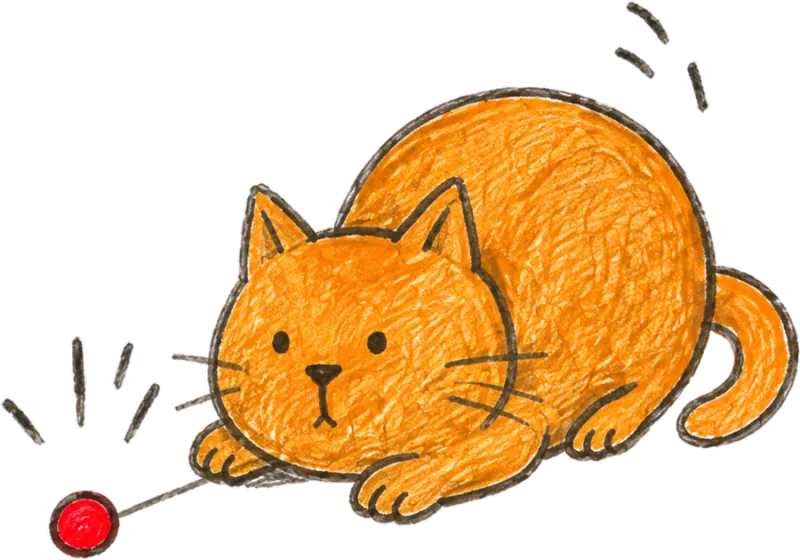
A low, tense crouch can suggest uncertainty, fear or readiness to retreat. A crouch with the hindquarters raised and the body moving slightly may instead occur before a pounce during play or hunting behaviour.
12. Rolling onto the back
A cat showing its belly may be relaxed or may be using a defensive posture. It does not automatically mean the cat wants a belly rub. Many cats dislike having their abdomen touched. Let your cat initiate contact and stop if it shows discomfort.
13. Rubbing the head or cheeks against you
Cats have scent glands around the face. Rubbing against a person or object is a familiar social and scent-marking behaviour. It can be part of greeting and affiliation.
14. Grooming in front of you
Grooming is a normal maintenance behaviour and can happen in many contexts. A cat grooming near you may simply feel comfortable enough to carry on with its routine. Sudden, excessive grooming or grooming that causes bald patches or skin damage needs veterinary advice.
15. Hiding or moving away
Hiding can be a normal way to rest or feel secure, but a new increase in hiding or avoidance can also be a sign of fear, stress, pain or illness. Make sure your cat has quiet hiding places and never drag it out just to interact.
What does relaxed body language look like?
A relaxed cat often has a loose body, smooth fur, soft eyes and ears in a neutral or forward position. It may approach voluntarily, stretch, rest comfortably or choose to sit near you.
Relaxation is best judged by the overall picture and by what is normal for that individual cat.
How to respond to your cat’s body language
- Let your cat approach rather than pursuing it.
- Pause petting when the tail starts lashing, ears turn back or the body becomes tense.
- Provide hiding places and high resting spots.
- Avoid punishment, forced handling and cornering.
- Keep routines predictable where possible.
- Make a note of changes in posture, movement, grooming, appetite or toileting.
When body-language changes need a veterinarian
Cats can hide pain and illness. Contact your veterinarian if your cat becomes unusually withdrawn, resists being touched, moves differently, stops grooming, changes eating or toileting habits, or shows a persistent change in behaviour. Sudden severe symptoms require urgent veterinary advice.
Learn to read the signals together
The more you notice your cat’s normal expressions and routines, the easier it becomes to spot when something is different. Pair body-language observations with the sounds your cat makes: our guide to 12 common cat sounds is a useful next read, along with signs your cat may trust you.
The Cat Translator helps you explore possible meanings behind your cat’s vocalisations. Combine that with body-language awareness to build a fuller picture of what may be happening.
Sources and further reading
- University of Edinburgh, Jeanne Marchig International Centre for Animal Welfare Education. “Feline body language.” https://vet.ed.ac.uk/sites/default/files/2024-09/Feline%20body%20language.pdf
- RSPCA. “Cat body language.” https://nextgen.rspca.org.uk/en/animal-care/cat-body-language
- Humphrey, T. et al. (2020). “The role of cat eye narrowing movements in cat–human communication.” Scientific Reports. https://www.nature.com/articles/s41598-020-73426-0
- Cornell University College of Veterinary Medicine. “Feline Behavior Problems: Aggression.” https://www.vet.cornell.edu/departments-centers-and-institutes/cornell-feline-health-center/health-information/feline-health-topics/feline-behavior-problems-aggression